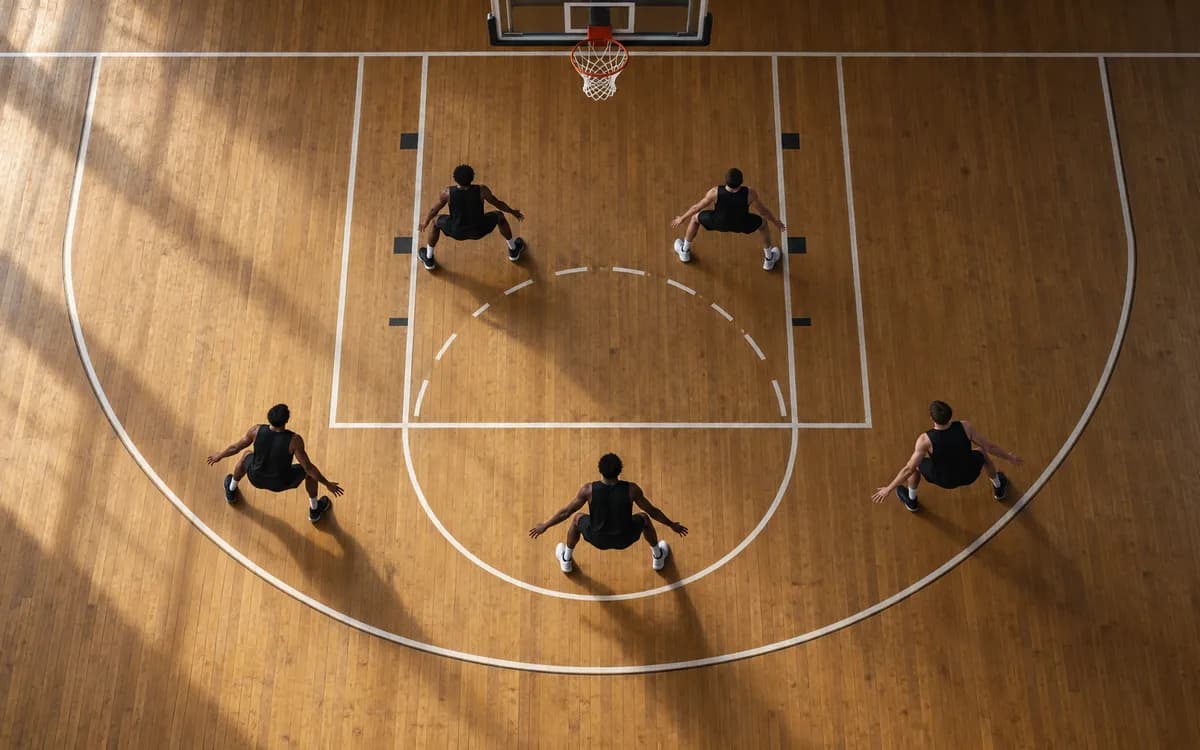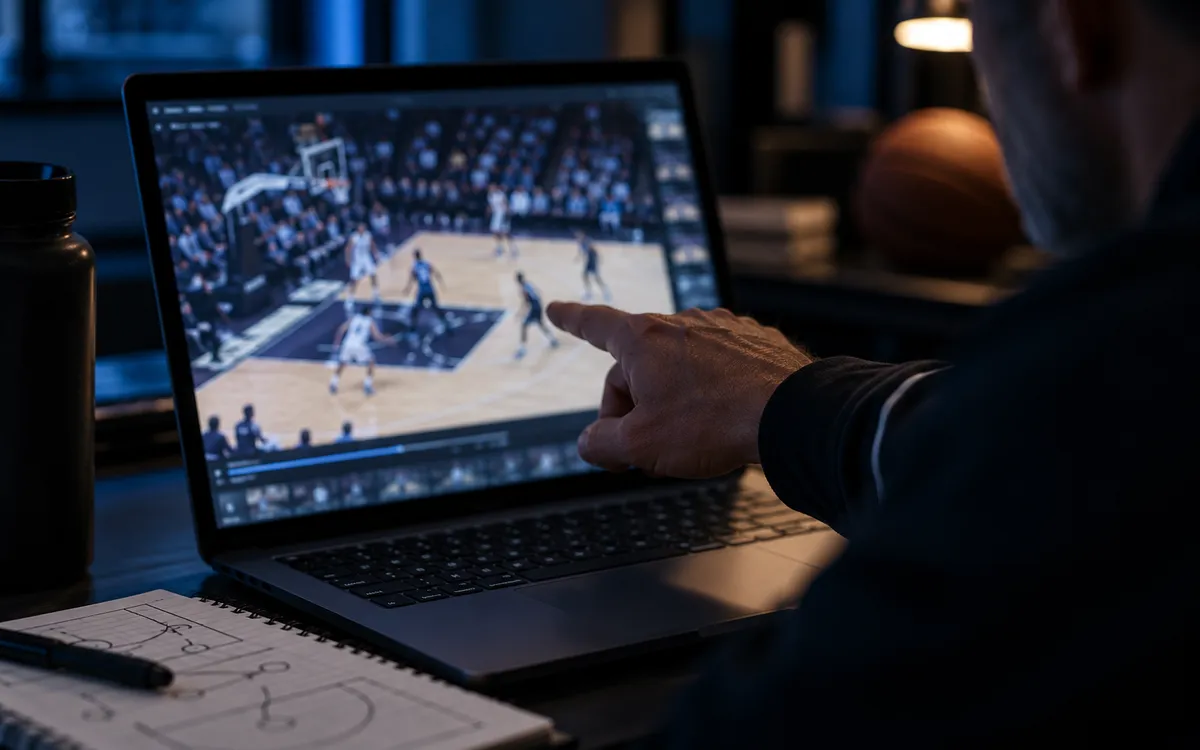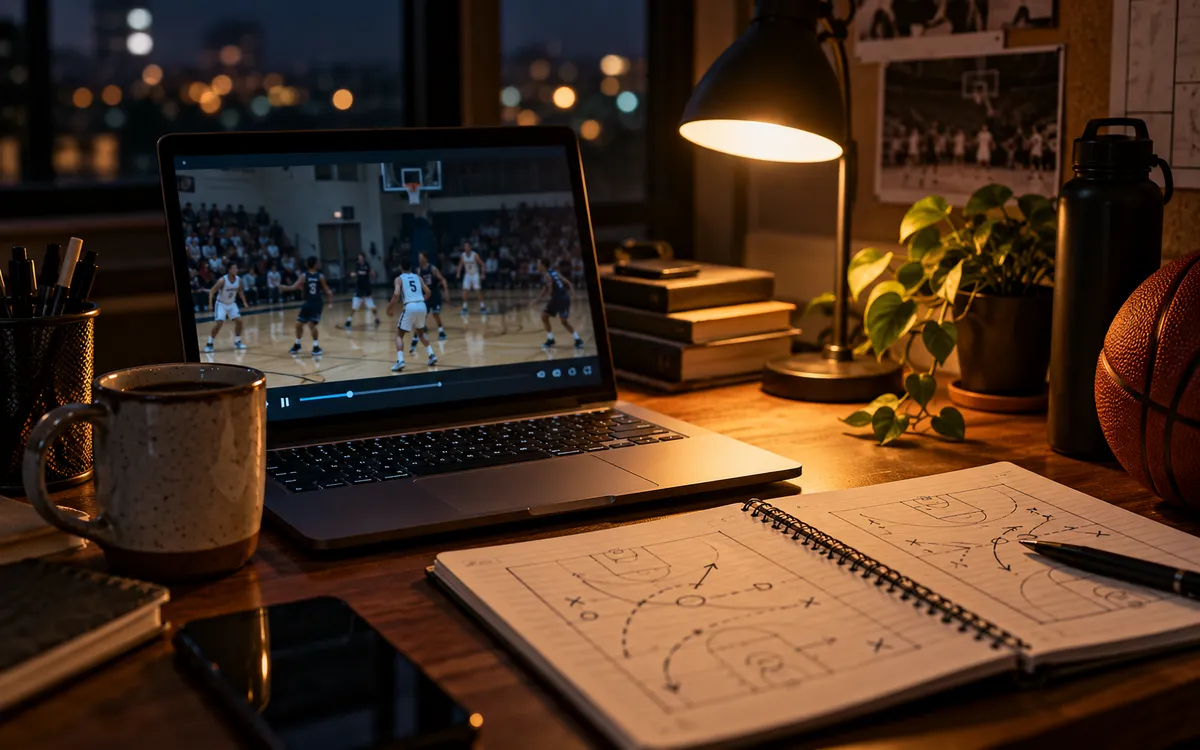
The advice you read about film is written for staffs. Three assistants, a video coordinator, a Sunday-night breakdown. If you are a volunteer, or a teacher who coaches, that advice makes you feel behind before you start. So do less, but do it every week.
This routine takes 20 minutes. It ends with one thing to fix at the next practice. That is the whole goal. One thing, fixed, every week, is 15 fixes in a season.
Minutes 0 to 5: pick six clips
Do not watch the game. Watching a full game is how a 20-minute routine turns into a 2-hour one. Pick six moments before you press play. You already know where to look: the stretch that lost the quarter, two possessions that felt wrong at the time, a turnover you cannot explain, a play call that worked, and one possession from the other team's best run.
If you recorded with a phone from the stands, scrub to those spots. If a parent or manager tagged the game, use their tags. Write the six timestamps down. In Hoops ClinIQ you tag a moment while you watch and it stays attached to the game.
Minutes 5 to 15: watch each clip twice
The first viewing is for what happened. The second is for why. On the second pass, watch away from the ball. Where was the weak-side defender? Who was late on the rotation? Did the screener set his feet? Most coaching errors live away from the ball, and the broadcast habit of following the ball hides them.
For each clip, write one line in this shape:
- What happened: "Right wing got a clean catch against our zone."
- Why: "Our 5 stayed in the paint instead of stepping to the short corner."
- Fix: "Short-corner read, 5-on-4 drill."
Minutes 15 to 20: choose one thing
Look at your six lines. Which fix shows up more than once? Pick that one. If nothing repeats, choose the one that costs you the most points. Write it on the practice plan as a 10-minute block. Everything else goes in a notes file for a later week.
Film is not homework for you. It is a way to decide what to spend 90 minutes of practice on.
Share two clips with players, not six
Players learn more from a short clip with one question than from a long video with a lecture. Send two clips before practice: one good thing, one fix. Ask a single question under each, such as "Where is the help coming from?" On the Team plan you can link the clip to its play, assign the play, and see who has studied it. You do not need an app for this. A group chat works. The point is to do it.
What a tool can and cannot do
Software can save you the searching. In Hoops ClinIQ you can ask for "every possession where we ran Horns" and open each clip from the answer. You can turn a clip of up to 15 seconds into a play to review. The coach reviews that, every time. Full-game automated breakdowns are planned for 2027, and we are not offering them yet.
What no tool does is decide what your team needs. That is still the coach's 20 minutes. Keep them, and keep them small.
A simple weekly rhythm
- Game night: phone high in the stands near half court, or a high corner, so all ten players stay in frame. A phone on a mini tripod is enough.
- Next morning: the 20-minute routine above.
- Practice: one 10-minute block on the fix.
- Next game: check whether that fix showed up. Note it in your six clips.
If you skip a week, do not try to catch up. Start the routine again on the next game. The routine is built to survive missed weeks.